Dear stakeholders who have joined Noul on its journey toward digital innovation in blood and cancer diagnostics, we are pleased to greet you through our sixth Sustainability Report.
Over the past year and this year, as Noul marked its 10th anniversary, the company passed two important inflection points in its growth trajectory. The first was shifting the center of gravity of company-wide management from research and development to business. Along with advancing its existing malaria (MAL) diagnostic product, the company successfully launched new products for blood analysis (BCM) and cervical cancer screening (CER) at the end of 2025, completing the core product portfolio of the miLab™ platform. This marked the successful conclusion of the large-scale research and development phase that Noul had continued over the past decade, and the company is now focusing on priority tasks for business scale-up.
In terms of both the scale and quality of business performance, 2025 was also a year of important structural progress. Driven by expanded device sales, revenue grew more than threefold year on year to approximately KRW 5.1 billion. More encouraging than the numbers, however, is that qualitative indicators improved dramatically as the project-based business model tailored to the characteristics of a First-in-Class product successfully took root. The average selling price of devices, a key indicator in the early stage of scale-up, rose 55% in the second half of 2025 compared with the first half, followed by an additional 8% increase in the first quarter of this year. Gross profit margin also improved significantly during the same period, from 5.7% to 43.8%. Based on these results, management believes that the task of improving the company's revenue structure has been successfully completed and that the business fundamentals for global scale-up are now in place.
Of course, there are also internal and external risk factors that must be carefully addressed and resolved as the company enters full-scale commercialization. In particular, securing additional growth capital for a venture company's transition to the scale-up stage, the time and resources required for regulatory approvals and field validation in each country due to the nature of First-in-Class products, and the resulting appearance of delayed visibility in short-term performance are risks that must be managed proactively and areas where stakeholders may understandably have concerns. Noul's management recognizes that thoroughly preparing to prevent these risks from materializing is an important responsibility at this stage, and will make this a top priority as we address them in a stable manner.
Even so, our confidence in the direction Noul is taking and in the global impact that will be created through decentralized diagnostics is stronger than ever. This is because leading indicators of revenue that have not yet been fully reflected in actual performance, such as countries where regulatory approvals have been obtained, distribution networks and key accounts, are steadily accumulating. The structure in which these leading indicators convert into actual revenue with a time lag is the essence of the business model that Noul is expanding. External and objective evaluations of our technical completeness and product competitiveness also support this confidence. Being featured in an official UNITAID report, achieving 100% AI accuracy in a clinical paper by North America's largest laboratory chain, being selected as a Top 30 finalist in the World Intellectual Property Organization (WIPO) Global Awards, receiving the Minister's Commendation at the first Industrial AI Awards, and securing new contracts in various countries all demonstrate that miLab™'s product competitiveness is being recognized at the global level.
This 2025-2026 Sustainability Report places significant emphasis on the key business activities and achievements toward this global scale-up, as well as the validation processes and results from customers and stakeholders for each product in our portfolio. It also reports the efforts and achievements made over the past year across business, research and development, quality, and manufacturing to enhance product competitiveness and secure business profitability. In addition, the report presents, through both data and narrative, Noul's various sustainability practices carried out throughout the company's growth and the economic and social value created through these activities.
Each year, Noul voluntarily discloses its Sustainability Report by publishing it in-house, without relying on external parties. This is a choice made not because of legal obligation or external demand, but because we believe that proactive communication based on responsibility and transparency is the foundation of mid- to long-term stakeholder trust and a core element of sustainable management. Even if the report is not polished or elaborate, we will continue to uphold our principle of communicating with stakeholders through a candid report that presents the company's mission and philosophy, as well as each year's achievements and challenges, without embellishment. We ask for your continued support and partnership as Noul continues its growth and takes on new challenges to create positive impact in the lives of one billion people. Thank you.

Chanyang (David) Lim
Chief Executive Officer
Kyunghwan (Peter) Kim
Chief Production Officer

Jungkwon (Justin) Ahn
Chief Operating Officer
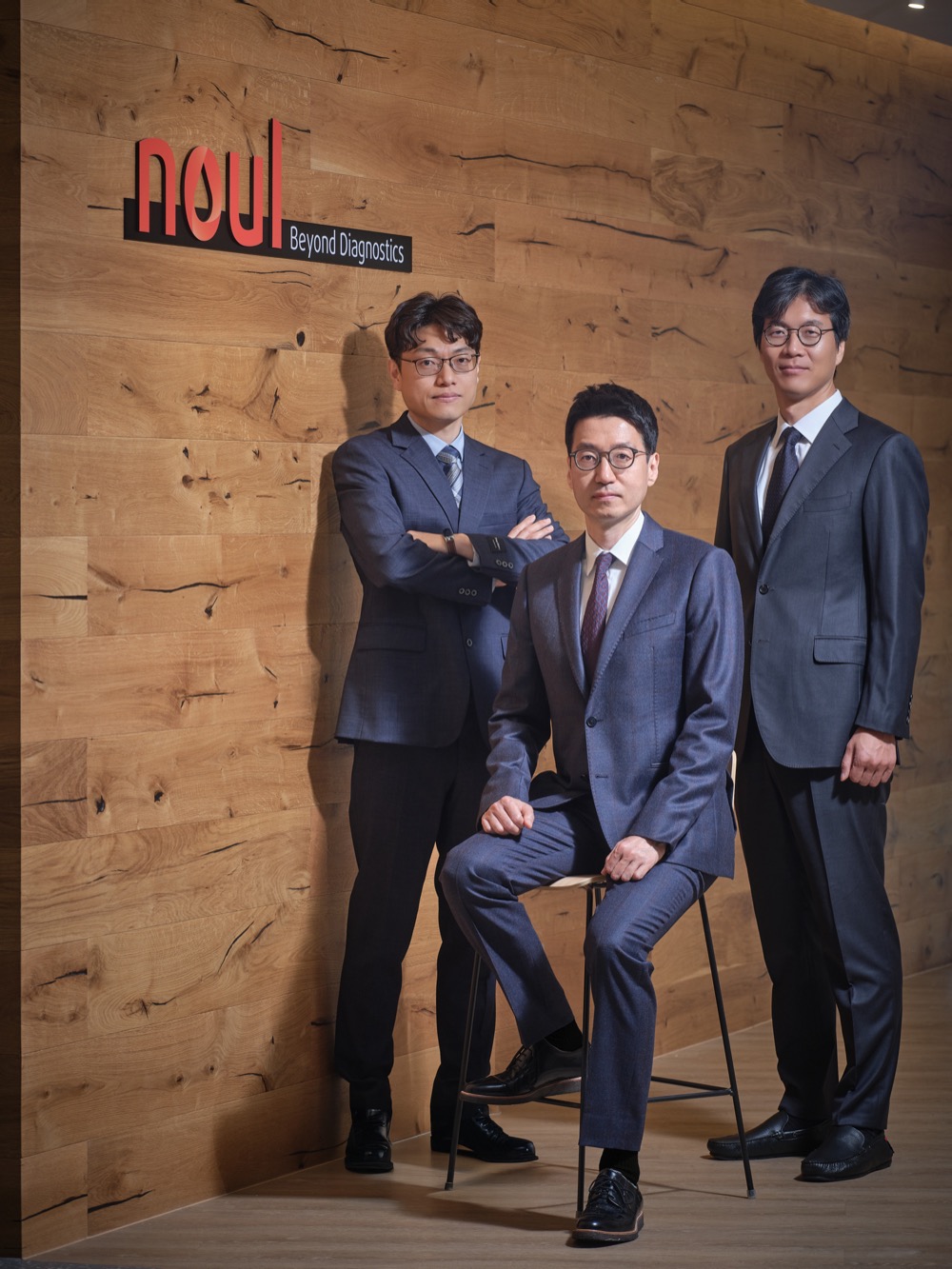
Peter Kim
Chief Production Officer
David Lim
Chief Executive Officer
Justin Ahn
Chief Operating Officer