Improvement in Access to Healthcare
Commitment
The global shortage of specialized medical personnel and the imbalance in medical infrastructure across countries and regions are structural challenges that have long remained unresolved under the centralized global healthcare system. As a result, nearly half of the world's population cannot access essential diagnostic tests, and in particular, four out of five people in limited healthcare settings are effectively excluded from diagnostic services due to economic and geographic disparities. Accordingly, WHO, other major international organizations and governments around the world are focusing on AI and digital technologies as key means to address health inequity and are advancing digital healthcare strategies as central agendas in health policy.
In line with this policy direction of the international community, Noul is supplying its AI-based decentralized diagnostic solution, miLab™, worldwide to enable expert-level diagnostics even in environments with limited specialized personnel and infrastructure. Noul is focusing its capabilities on providing products and services that can fundamentally address unmet needs in global healthcare settings, including malaria (MAL), one of the world's three major infectious diseases; blood testing (CBC), an essential area of basic healthcare; and cervical cancer (CER), which shows a significant mortality gap by income level.
Noul focuses on maximizing utility from the perspective of users, including patients and customers, so that the global expansion of the miLab™ platform goes beyond product supply and leads to tangible improvements in healthcare access for local communities. Based on close collaboration with global partners and customers, we will actively reflect the needs of diverse healthcare settings in our products and services, while continuously securing the reliability of diagnostic results through technological and quality advancement. Furthermore, we will help more patients around the world receive accurate diagnosis at the right time, and contribute to strengthening healthcare systems at the regional and national levels.
Approach
Implement and optimize product features and performance based on AI and digital innovation technologies that can fundamentally address unmet needs in global healthcare settings.
Execute customized market access strategies that reflect the healthcare environments and demand characteristics of high-income countries (HICs) and low- and middle-income countries (LMICs).
Strategically develop new markets at national and regional levels, and promote product expansion and improved diagnostic access through public procurement and private healthcare markets.
Continuously strengthen product reliability and competitiveness through global clinical validation and multi-country regulatory approvals.
Monitoring Metrics
Cumulative miLab™ Cartridges Distributed to LMICs
Number of countries with global supply contracts for public health purposes
MAL - Malaria Diagnostic Solution
97.4%
P. falciparum (Pf) sensitivity
98.8%
P. falciparum (Pf) specificity
95.9%
P. vivax (Pv) sensitivity
97.8%
P. vivax (Pv) specificity
PCR-based
BCM - Blood Count & Morphology Solution
0.97
CBC (RBC/Hgb/HCT) correlation
0.94
Lymphocyte correlation
0.89
Monocyte correlation
88%
Blast sensitivity
96%
Blast NPV
vs. Central Lab Analyzer + expert manual review
CER - Cervical Cancer Screening Solution
Korea
82.46%
AI-assisted reading sensitivity (ASC-H+)
52.63%
Conventional microscopy (ASC-H+)
+29.83%p sensitivity improvement · equivalent specificity (98.47% vs. 99.24%)
Progress
Malaria Diagnostics
miLab™ MALIn 2025, Noul collaborated with major European medical institutions to validate the clinical applicability of its malaria diagnostic solution and expand global references. Equipment was installed and performance evaluations were conducted mainly at tertiary general hospitals and national reference institutions, including Charité – Universitätsmedizin in Germany. Through these activities, Noul confirmed the diagnostic accuracy and operational efficiency of miLab™ MAL in real clinical settings.
In particular, according to ESCMID 2026 presentation criteria, a preliminary clinical evaluation at Charité using 148 blood samples recorded diagnostic accuracy of 100% sensitivity and 97.2% specificity. It also confirmed operational efficiency by reducing turnaround time from approximately 60 minutes to 16 minutes compared with conventional microscopy and reducing cost per sample by 72%. The clinical collaboration and supply contract with Charité, one of Germany's key institutions for malaria surveillance, represent an achievement in which Noul's AI-based diagnostic technology was recognized by one of the world's leading medical institutions for both diagnostic accuracy and operational efficiency.
Building on accumulated clinical validation experience, Noul aims to contribute to improving diagnostic efficiency and comprehensive diagnostic capabilities at medical institutions by pursuing a diagnostic platform expansion strategy in 2026 that integrates malaria diagnostics (MAL) and blood count and morphology (BCM).
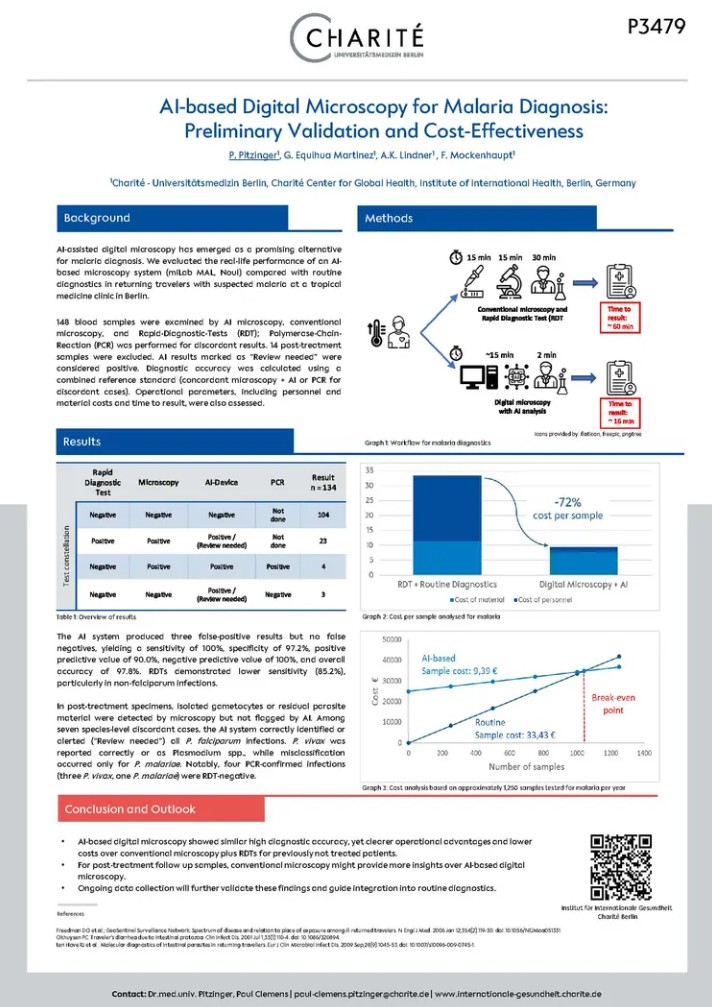
Source: ESCMID 2026 (P3479), Charité Universitätsmedizin Berlin
Learn more → clinical-evidence.noul.comTo expand diagnostic access in malaria-endemic regions and enable miLab™ to be used in national public healthcare systems, Noul has worked with African public health institutions to pursue entry into the public market through performance evaluations and field application studies. In Benin and Côte d'Ivoire, Noul has collaborated with national malaria programs (PNLP) to conduct government-led performance evaluations and systematically build the clinical evidence needed to enter public procurement markets. In addition, through collaboration with a Ghanaian research institution, Noul conducted academic research and published papers based on performance evaluation data, and at a local site in Malawi, it is also pursuing post-market analysis using equipment operation data.
These validation activities have led to tangible business results. In February 2025, Noul signed a miLab™ supply contract with the government of the Republic of Benin in West Africa, and it has also sequentially secured public procurement contracts through national screening programs in six Central American countries and Kuwait.
Based on collaboration with African public health systems, Noul is contributing to the expansion of diagnostic access in malaria-endemic regions. At the same time, through activities such as global webinars, it is sharing the clinical value of digital malaria diagnostic technology with the international medical community and expanding its collaboration network. Based on these activities, Noul plans to move beyond its existing Africa-centered business structure and expand partnerships across multiple continents, including Europe, North America and Latin America, thereby strengthening its position in the global diagnostics market.
Blood Count & Morphology Analysis
miLab™ BCMNoul launched an upgraded version of miLab™ BCM with enhanced clinical utility by actively reflecting feedback from real-world healthcare settings. In this upgrade, staining and imaging technologies were advanced to render the morphological characteristics of cells more clearly, and the AI algorithm was strengthened to identify subtle abnormal signs such as abnormal lymphocytes. In particular, Noul introduced a "System Flag" function that automatically recognizes poor sample smear or staining status and alerts medical professionals, reducing the risk of misdiagnosis and further improving the objective reliability of test results.
Product performance advancement is also leading to new business opportunities in the global market. In 2025, Noul signed a supply contract worth approximately USD 2.7 million in the Taiwan market, establishing a foundation for entry into advanced medical markets in Asia. Through contracts with major hospitals and screening centers in Italy, Noul demonstrated its product competitiveness in the European in vitro diagnostics market. It also began collaboration with a global medical device company by signing a supply contract with Nihon Kohden Mexico, a global blood testing equipment company. In addition, through collaboration with large global lab networks in the United States and Europe, Noul is confirming achievements in reducing logistics costs and time associated with sample transport compared with conventional methods and improving the efficiency of testing workflows. Noul considers expansion of diagnostic indicators an important task and plans to continue expanding the scope and accuracy of blood disease diagnosis by adding various blood-related parameters, including immune response indicators, in the future.
Approximately 20% of peripheral blood tests worldwide are performed on infants and children who require special care during blood collection. However, conventional large-scale equipment often requires venous blood collection and a relatively large amount of blood, placing a burden on pediatric patients and their caregivers. Noul's miLab™ BCM enables precise cell analysis with only 5μL (microliters) of ultra-low-volume blood, presenting new diagnostic possibilities in settings with high unmet needs, such as neonatal intensive care units (NICUs) and pediatric medical institutions.
Noul has currently completed stability validation for approximately 30 infant samples using capillary blood collected from fingertips or heels. Because pediatric samples have highly diverse cellular characteristics and require a more precise optimization process, Noul plans to secure large-scale clinical data by the end of 2026 and complete validation of the technology's effectiveness. Based on this, Noul aims to enter the pediatric diagnostics market in earnest and contribute to creating a patient-friendly diagnostic environment that reduces the burden of repeated blood collection for pediatric patients.
Cervical Cancer Screening
miLab™ CERIn March 2025, Noul signed an exclusive sales agreement worth at least KRW 2 billion over two years with six Central American countries, including Panama, establishing a bridgehead for entry into the Latin American public procurement market. In particular, in November, Noul completed the local delivery of miLab™ CER devices through a distribution agreement worth approximately KRW 1.1 billion covering six countries including Panama, demonstrating product competitiveness in both public procurement and private healthcare markets.
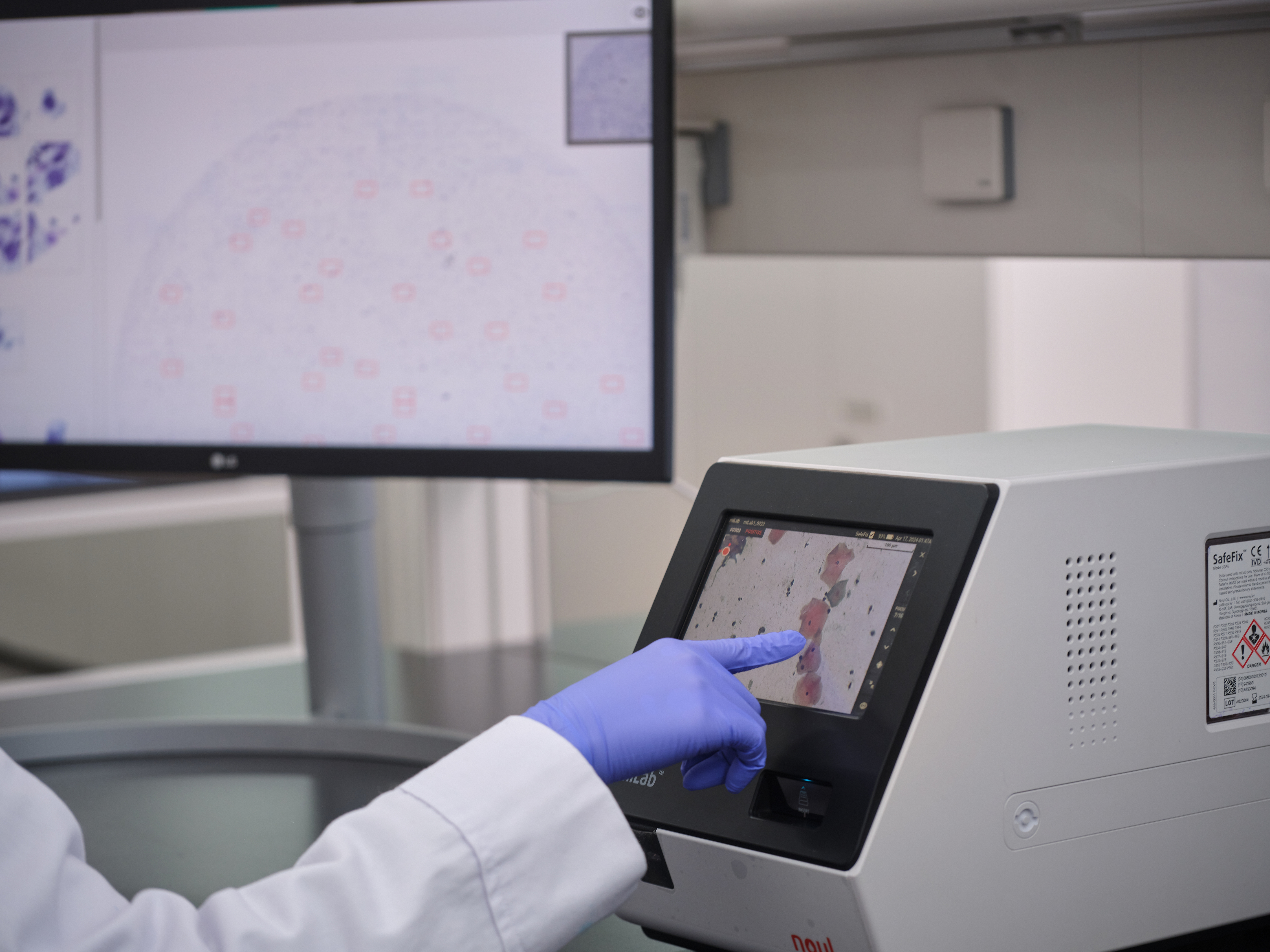
Latin America has a higher incidence of cervical cancer than the global average, and in some Central American countries, approximately 30 to 40 new cases occur per 100,000 women. However, due to shortages of pathology specialists and testing infrastructure, access to screening is limited, and in some countries only about 20% of the needed cervical cytology tests can be processed. miLab™ CER is a solution that automates the entire process from staining of smeared cervical cell slides to AI interpretation. It is designed to enable rapid and accurate diagnosis even in healthcare environments with shortages of specialized personnel, thereby addressing these structural limitations.
Building on these achievements, Noul plans to expand collaboration with local medical institutions and national screening programs (National Screening Program), increasing access to early cervical cancer diagnosis across Latin America and contributing to the expansion of diagnostic infrastructure.
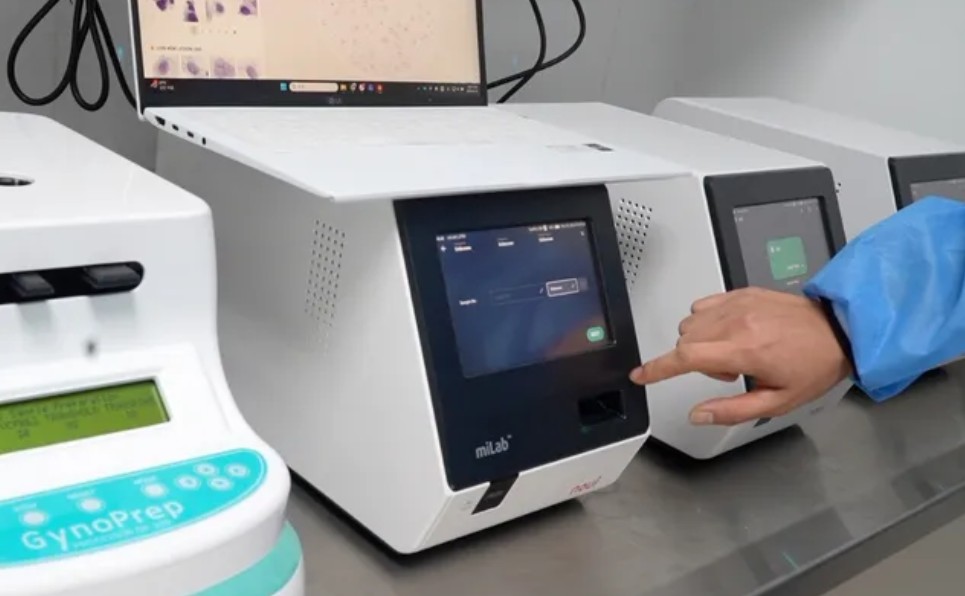
Photo: miLab™ CER equipment installed at Policentro San Isidro, Panama
Source: Telemetro, "San Isidro tendrá moderno centro de citopatología para detectar cáncer cervicouterino", Noemí Ruíz, 2026.02.27
Europe is a representative advanced medical market that requires high medical standards and strict quality criteria, and expectations for accuracy, reproducibility and testing efficiency are also very high in cervical cancer diagnostics. At the same time, as population aging and increasing testing demand intensify shortages of pathology specialists and workload burdens, the need for automated and digital diagnostic solutions is gradually expanding.
In 2025, Noul entered six Eastern European markets, including the Czech Republic, Hungary and Poland, by forming a partnership with Biomedica, a global diagnostic distribution company. Based on Biomedica's network of more than 100 cytopathology laboratories and hospitals in these countries, Noul secured a foundation to access an LBC testing market of approximately 440,000 tests per year. In collaboration with local hospitals and testing institutions, Noul is pursuing European market expansion through pilot adoption and reference site development.
Noul will continue expanding cooperation with local partners and customers and gradually increase adoption of miLab™ CER through a reference-based expansion strategy. Through this, Noul aims to improve both diagnostic efficiency and testing access in advanced European medical markets while strengthening brand reliability and technology leadership.
Regulatory Response
Noul is accelerating market entry by achieving both global regulatory approval expansion and cost reduction through the establishment of a systematic and efficient regulatory response process. By proactively handling preliminary tasks with long lead times and continuously improving partnerships with verified local representatives, Noul improved operational efficiency in 2025 by shortening the average time required to obtain regulatory approvals by approximately 35% year on year and reducing related costs by approximately 12%. Through this, Noul successfully secured more than 10 essential product approvals across five countries, including new registrations in the United Kingdom, Switzerland and Brazil, as well as Vietnam and the Philippines.
In addition, as a core strategy for global market expansion, Noul is strategically pursuing certifications in advanced markets such as the United States and Europe. In January 2025, Noul received official FDA Pre-Submission feedback for its blood analysis solution (BCM). It also selected an official notified body (DNV) for European IVDR certification, where regulatory requirements have become more stringent, and completed the written contract and application submission, establishing the foundation to meet the highest global standards for quality and safety.
As simultaneous entry into multiple countries becomes more active, Noul plans to advance clinical data and quality documentation in line with elevated global review standards and further strengthen its internal regulatory monitoring system. Based on this, Noul will proceed as planned with additional product registrations underway in various countries, as well as official approval procedures for the U.S. FDA and European IVDR, in order to supply miLab™ solutions more rapidly.